Qum, being one of the largest cities in Iran, has an affordable public bus service that covers over 20 routes connecting different neighbourhoods, landmarks, and transportation hubs and boasts a fleet of over 300 buses.
Finding Your Route
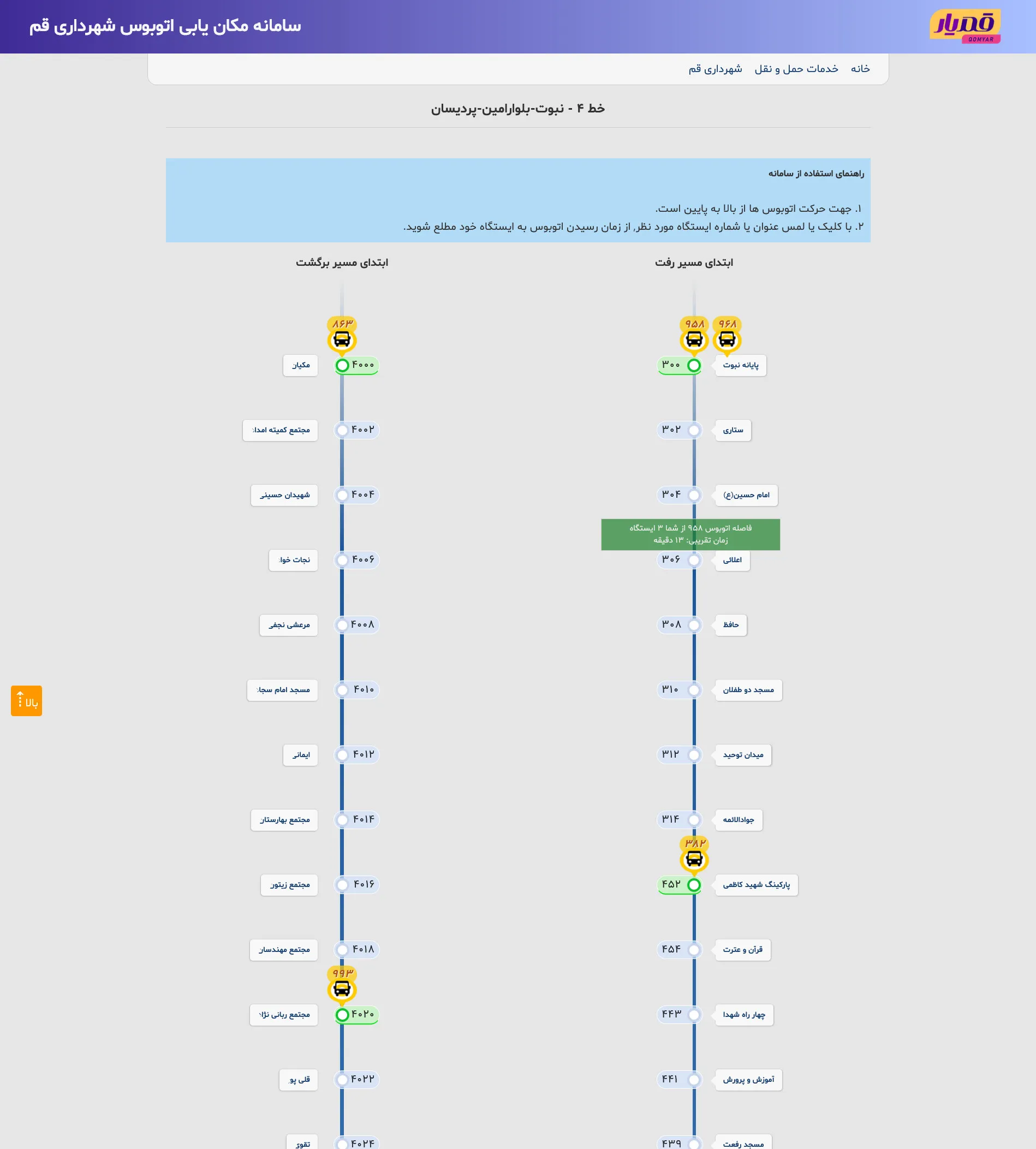
Unlike in Tehran, where bus routes are clearly mapped and displayed at bus stops, passengers in Qum must rely on other methods to navigate the bus system. These include reading the destination displayed at the front of the bus, asking the driver about the route, or using a recently developed bus tracking system. Each bus stop in Qum features a QR code that, when scanned, directs users to the Qomyar website displaying the real-time location of the bus serving that stop and provides an estimated time of arrival. The bus stops are shown on a topological map rather than being marked on a physical city map, making it more challenging for those unfamiliar with the area. However, another website is available that displays each bus route on a city map. By clicking on the bus icon in the top left corner and selecting the desired route, users can view the entire route and the bus stops served by that particular route.
On Board
Inside the buses, passengers can expect segregated seating arrangements, with women at the back and men at the front, and ventilation systems to ensure passenger comfort.
Paying with the Qum Card
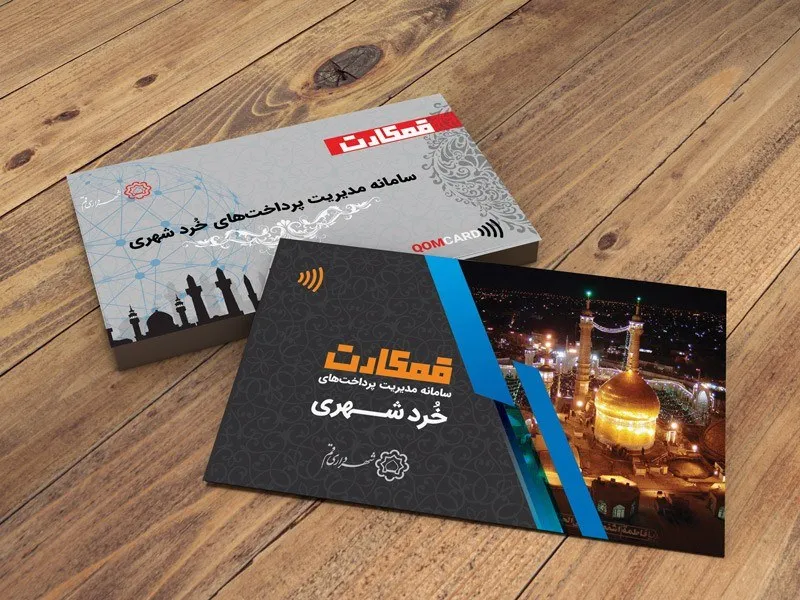
One of the key advantages of using buses is their very low fares compared to other modes of transportation, making them accessible to a wide range of people. All buses are now cashless so fare payments can only be made by bank cards or the ‘Qum Card’, a contactless smartcard used for public transport payments which is available to purchase and top-up at kiosks near certain bus stations. A single fare is less than $0.10 reducing further to around half of that if the Qum Card is used to pay.
Like any public transportation system, there are also challenges associated when using buses. During peak hours, buses can become overcrowded, leading to discomfort for passengers. Additionally, traffic congestion and delays may affect bus schedules, requiring passengers to plan their journeys accordingly.
Comments & Suggestions
Have something useful to add? Share your experience, recommendations or updates with other students in Qum. This could be a change to the information above, a useful tip, a service or place you recommend, or anything else that may help others. Comments are reviewed before they are published. Please see our comment policy for what can be published and how to request the removal of a contribution.
Loading contributions…