Since the Iranian civilisation is one of the oldest in the world, it inevitably has customs and etiquettes which may appear strange at first. A little familiarity goes a long way towards settling in and avoiding awkward moments.
Ta’aruf
One of the most striking of these, is ta’aruf. Ta’aruf can be described as a complex form of formalities and politeness that involves a series of ritualised exchanges and gestures where individuals insist on offering something, such as a gift or service, and the recipient politely declines multiple times before accepting.
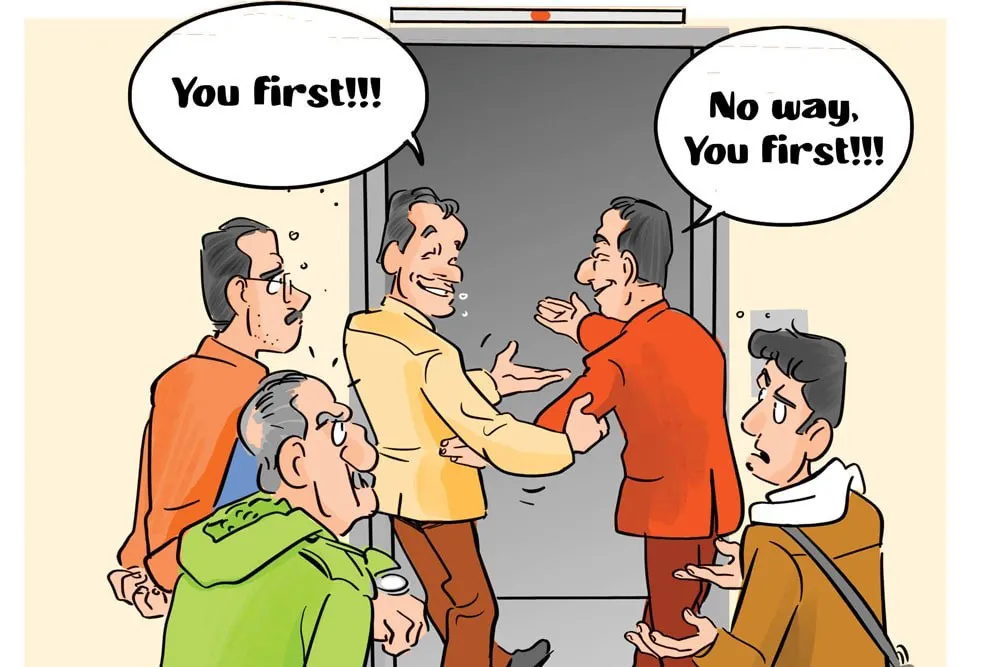
It may initially be very pleasing to be on the receiving end of such complements and courtesy; however, one quickly realises that many people express such gestures out of habit and tradition rather than with sincere intent. A typical example is when a customer would like to pay for their goods. After the cashier calculates the cost, he would say “Qaabil nadarad”, literally ‘it’s not worth it’. To the uninformed, this would suggest the customer is being offered the goods for free! However, this is just a verbal formality and the correct response would be to insist the cashier takes the payment by saying “befarmayeed”.
Many such instances are encountered during everyday life in Iran, so foreigners must learn to navigate through all the ta’aruf to avoid potential mistakes and embarrassment.
Greetings
Iranians typically greet each other by saying ‘Salaam’ rather than the full ‘al-Salaamu Alaykum’ and ‘Alaykum al-Salaam’ that many Muslims are accustomed to. Alternatively or additionally, they may use the Farsi equivalent of ‘Good Morning’, ‘Good Afternoon’ or ‘Good Evening’. This is accompanied by a medium-grip handshake or placing one’s hand on one’s chest and bowing very slightly as a sign of respect. Unlike the Arab tradition, embracing and exchanging kisses on the cheek or shoulder is usually reserved for family members or very close friends.
All of these customs, of course, apply between people of the same gender, as law and tradition forbid physical contact between non-related males and females. When parting, Khuda Hafiz (may God protect you) is the phrase most commonly used to bid farewell.
In Iranian culture, it is customary for people to address each other using formal titles, even in informal gatherings or between friends and colleagues. Men should be addressed as ‘Agha’ (Mr) and women as ‘Khanom’ (Mrs), followed by their surname e.g. Agha Tabatabai or Khanom Beheshti. If one does not know the counterpart’s surname, simply using ‘Agha’ or ‘Khanom’ is also sufficient e.g. Salaam Agha. Interestingly, titles can also be used to address a person by their first name which indicates a closer relationship whilst still giving respect. For example, a man would be addressed by his first name followed by ‘Agha’, such as Ali Agha and a woman by her first name followed by ‘Khanom’, like Fatemah Khanom. Addressing others by their first name alone is really only reserved for family or very close friends. It is worth noting that many Iranian surnames reflect a family’s local city or region, for example, someone with the last name Tehrani is likely to have ancestors from Tehran.
Dress Code
Due to the influence of a number of different cultures on Iran and Qum, men will be seen wearing a range of different clothing styles. Scholars will usually wear the traditional abaa and kaba with a turban while seminary students are expected to wear long-sleeved, loose fitting clothes and should refrain from wearing western clothing such as jeans, suits and t-shirts in public. Wearing shorts in public is not permitted.

A common item in a seminary student’s wardrobe is the collarless shirt, known as the talabeh (hawzah student) shirt. These, and other suitable clothing, can be purchased from the Saheb al-Zaman Shopping Mall.
Women, as expected in an Islamic environment, are required to adhere to the Islamic dress code and must observe the hijab at all times. Outdoors, many women will wear a black chador — a large piece of cloth used to cover the head and body — and whilst visiting the holy shrine, as a sign of respect, wearing a chador is mandatory.
Hospitality
Iranians have a strong culture of hospitality and treat guests with great warmth and generosity. Inviting guests over for meals or tea is a common tradition in Iran, and hosts often go to great lengths to ensure their guests are comfortable and well-fed. It is customary for guests to bring a gift for the host, such as a box of sweets, to express their appreciation.
When guests arrive, they are typically greeted with a warm welcome and offered refreshments such as tea or a cold beverage. It is considered polite to accept the offered refreshment, even if one does not plan to consume it. The host may then engage in conversation with the guest, asking about their well-being, family, and other topics of interest. Unfortunately, their friendliness and curiosity can sometimes be mistaken for an intrusion into one’s privacy, as they often ask questions which — especially to those from the West — seem very personal. One shouldn’t feel offended with such intrusive questioning, and could instead try to delicately side-step questions one is not comfortable answering.
In Iranian culture, it is customary to offer guests a generous spread of food, often including traditional dishes such as rice, stews, kebabs, and bread. It is common for hosts to insist that their guests take seconds or even thirds, and it may be considered impolite to refuse such offers. Guests are also expected to frequently show respect and gratitude towards their hosts and to compliment the food served. Phrases like “daste shoma dard nakoneh” (may your hands not hurt) are used to express appreciation for the hospitality they have received. The host will often respond with modesty, indicating it was no trouble at all.
Table Etiquette
Iranian table etiquette reflects the values of hospitality, respect, and community, and is rooted in the country’s cultural and religious heritage. Traditionally, meals are served on a sofreh, a large piece of cloth spread on the floor, though tables and chairs are commonly used in modern settings. Seating is usually arranged to ensure that proper hijab is maintained, often meaning the separation of men and women. Food is typically served family-style, with large communal dishes placed in the centre of the sofreh so everyone can help themselves. It is polite to wait for the host to start eating although he/she will insist the guests start first.
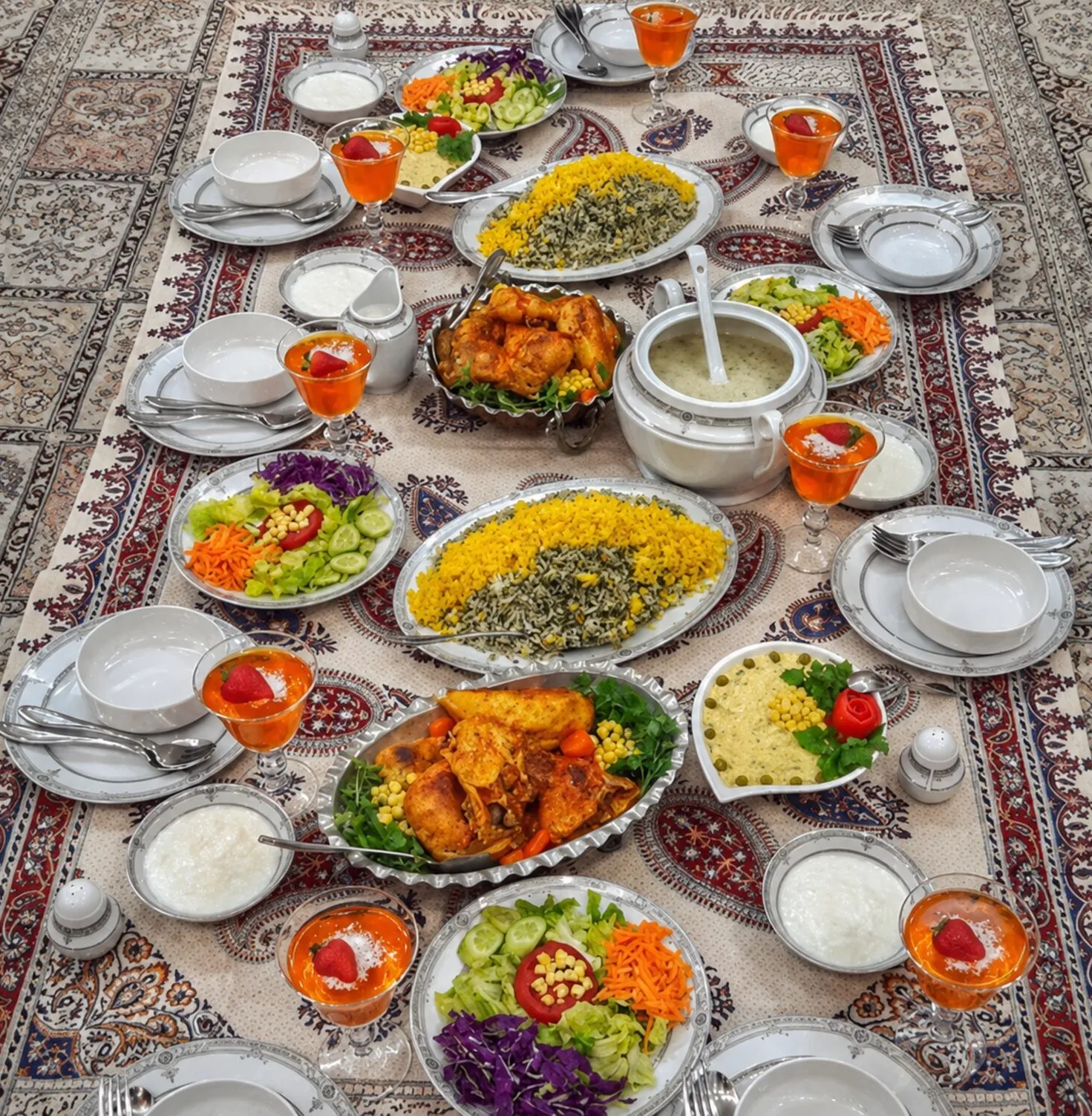
A notable difference between Iranian and Western food culture is the way utensils are used. Iranians primarily use spoons and forks for their main meal and knives are very rarely seen at the dining table, except for cutting fruits. Some foods are wrapped in bread and eaten by hand only. (Based on Islamic etiquettes, the right hand is used to eat food.)
When passing dishes to others, it is customary to use the right hand or both hands, as the left hand is considered impolite. It is also polite to take a portion of food and then pass the dish on to the next person. At the end of the meal, it is customary to thank the host again and to express how enjoyable the food was. Helping to clear the table can also be a sign of appreciation and respect, though the host might insist the guest relax and enjoy the hospitality.
Bureaucracy
Iran is well known for its excessively complicated administrative procedures — challenging not only for foreigners to navigate, but locals as well. Government offices, often spread across various locations, handle a myriad of tasks such as issuing permits, licences, and official documents. The paperwork involved can be extensive, and the need for multiple stamps and signatures from different departments often adds to the time and effort required.
Visiting these offices, one quickly gets the impression that they are unnecessarily overstaffed by unqualified and inexperienced personnel, possibly as a measure to address the high rates of unemployment.
The influence of local customs and the importance of personal relationships cannot be underestimated; knowing the right person can significantly expedite processes that might otherwise take considerably longer.
Despite efforts to modernise and digitise certain services, many procedures still rely heavily on physical paperwork and in-person visits, which can be time-consuming and frustrating. Furthermore, the language style, ta’aruf and laid-back attitude means Iranians can take quite a long time to get to their point, so simple tasks and requests seem to take much longer to accomplish.
One stark difference between the administrative style of Iran and what many western students are accustomed to, is the expectation that the individual is responsible for chasing up any paperwork, rather than assuming it will be completed once handed to the appropriate staff member. This, unfortunately, has led to many students experiencing delays in the completion of their administrative work and has sometimes even resulted in significant financial loss.
Awareness of these social norms, in addition to a combination of patience and persistence, is essential for anyone dealing with bureaucratic processes in Iran, and can help individuals effectively manage and complete their administrative tasks.
Comments & Suggestions
Have something useful to add? Share your experience, recommendations or updates with other students in Qum. This could be a change to the information above, a useful tip, a service or place you recommend, or anything else that may help others. Comments are reviewed before they are published. Please see our comment policy for what can be published and how to request the removal of a contribution.
Loading contributions…