Although some seminaries provide housing for married couples and families, many students will need to find their own accommodation. Renting a place is the most common option for families staying in Qum.
Types of Housing
There are various housing options available in Qum; however, they would typically fall into one of four categories:
Villas
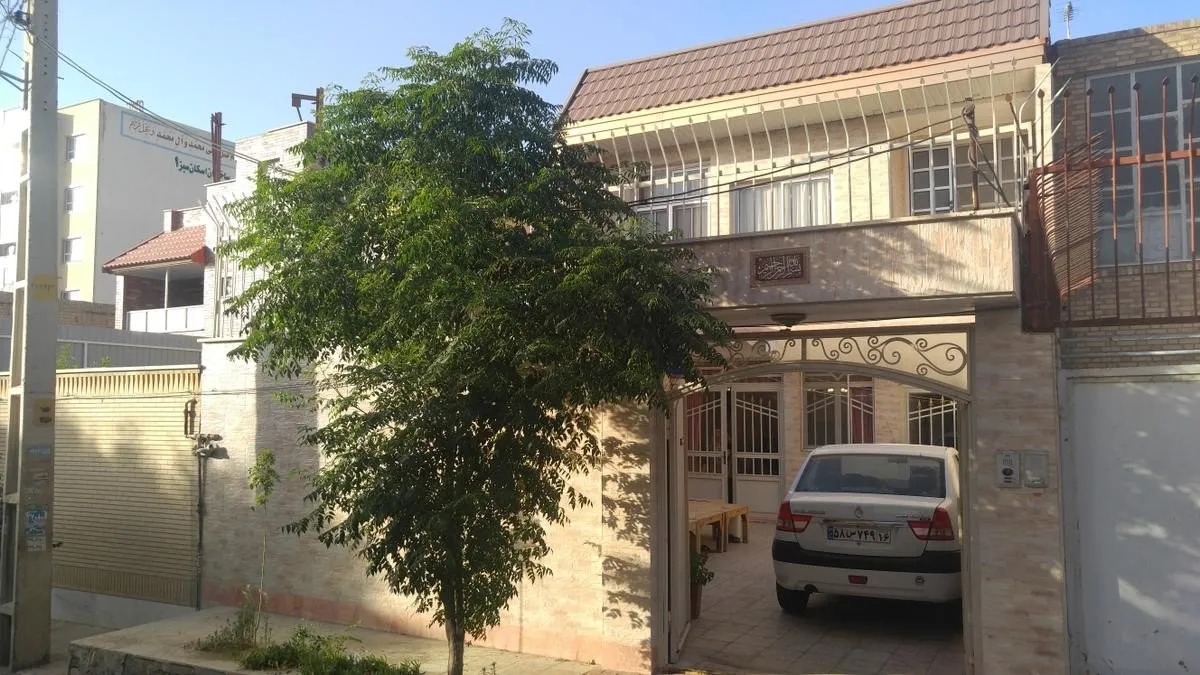
A traditional two-three storey house with each floor normally designed into a separate apartment. These apartments normally have one or two bedrooms and a large living room. The main entrance usually leads to a tiled front garden normally reserved for use by those living on the ground floor but may also be used for parking or storing bikes, strollers etc… by other residents too depending on the terms of the contract.
Apartment
A typical, modern apartment is usually in a block of three or more floors. Most apartment blocks will have allocated parking for each apartment and sometimes even a private storage room. Apartments tend to be more expensive than renting a villa as they are generally newer builds and more sought after.
Duplex
A home with two floors, usually a ground floor and another one above it, designed as one unit. The living room, kitchen and washroom are located on the lower floor with the bedrooms in the upper floor. Unfortunately, these larger houses are very rare and, if found, can be extremely expensive.
Dar Bast
For those with larger families, one option is to rent out a whole villa (referred to as dar bast). This isn’t always ideal since each floor is designed to be a separate unit, however, it is sometimes the only choice since landlords are often reluctant to rent out single apartments to families of greater than 3-4 people.
Furnished vs Unfurnished
Almost without exception, long-term rental properties are provided unfurnished. This means the property will be handed over to the tenant completely bare - no furniture, appliances or carpets and, quite often, even lighting fixtures and curtains aren’t included. Furnished properties are available, however, they are normally for very short-term (ranging from a few days up to one month), smaller and considerably more expensive than unfurnished properties.
Cost
Renting a house or apartment in Iran can be quite different from what one might be accustomed to in western countries. Understanding the system of rental payments (ijareh) and security deposits (rahn) is important to get a good idea of the cost of accommodation as rental listings will almost certainly mention both figures.
Security deposits in the west are typically the same amount as the monthly rent and are intended to be used to pay for damages or loss of property that may have occurred during the tenancy period. In Iran, however, the security deposit amount can vary significantly, ranging from twice the annual rent to a staggering 1/5th of the property’s total value! Landlords commonly utilise these security deposits to invest in businesses, properties or profit-gaining bank accounts to boost their own income.
It is also important to be aware of the inversely proportional relationship between the monthly rent and the security deposit as these can be negotiated at the beginning of the tenancy. Roughly speaking, for every $20 increase in monthly rent, the security deposit amount would decrease by $1000, and vice versa.
So a listing of $200/month with a $5,000 deposit is worth exactly the same to a landlord as one at $220/month with a $4,000 deposit. Use the calculator below to try it for yourself: enter the rent and deposit from any listing you are considering, then move the slider to see how the two figures trade off.
Try it — trade rent against deposit
Enter the two figures from a listing you have found, then drag the slider to see what the same property would cost if you negotiated the rent up or down.
Not all landlords will negotiate, especially for large changes.
It is worth noting however, that not all landlords may be willing to negotiate these amounts, especially if significant changes are requested.
While it is possible to find properties that can be rented solely by paying a large security deposit without any monthly rent (referred to as rahn kaamil literally ‘full security deposit’), the concept of renting without any security deposit at all is virtually unheard of in Iran. Although the ‘full security deposit’ option may sound attractive, one should be aware of the following:
- The security deposit must be paid in local currency only and will be returned likewise. Since the Iranian currency is prone to fluctuation (normally devaluation), one’s deposit may end up being worth less at the end of the tenancy than it was at the beginning.
- Since landlords regularly use security deposits for investment purposes, it is often more difficult to recoup the full amount immediately, especially when large sums are involved. Landlords generally rely on the next tenant to pay their deposit before refunding the previous tenant. This sounds good in theory but practically a new tenant isn’t always found before the end of the previous tenancy causing delays in retrieving the money.
- There is a difference of opinion amongst the scholars regarding the validity of such a rental contract where there is no (or minimal) monthly rent. Those interested are advised to refer to their own marja for further clarification.
Rent prices are influenced by several variables such as the type of housing, property size, number of bedrooms, and location. Due to these numerous factors, providing precise and detailed cost estimates can be challenging. However, to obtain a general understanding of average prices, the following table can be helpful.
Although there are laws and regulations governing the maximum amount a landlord can legitimately raise rental prices upon renewal (capped at 20%), practically, they are not adhered to and many landlords increase the rent by far more, sometimes even over 100%. However, these increases are in local currency and are rarely reflected as much in the equivalent foreign currency.
| Size (m²) | Bedrooms | Av. monthly rent ($) | Av. security deposit ($) |
|---|---|---|---|
| 75–80 | 1 | 100–120 | 5,000 |
| 100–110 | 2 | 120–150 | 6,000 |
| 150–160 | 3 | 220–250 | 12,000 |
Comments & Suggestions
Have something useful to add? Share your experience, recommendations or updates with other students in Qum. This could be a change to the information above, a useful tip, a service or place you recommend, or anything else that may help others. Comments are reviewed before they are published. Please see our comment policy for what can be published and how to request the removal of a contribution.
Loading contributions…