Museums in Qum offer a glimpse into the rich cultural, religious, and historical heritage of the region. These museums house a diverse array of artifacts, artworks, manuscripts, and exhibits that reflect Qum’s significance as a spiritual, academic and religious hub. Visitors can explore collections that span centuries, providing insights into the religious traditions, scholarly achievements, and everyday life of the city’s inhabitants. There are three main museums worth visiting.
Lady Masumah Museum
Located in Astaneh Square, adjacent to one of the main entrances of the Lady Masumah (a) shrine, this museum houses two main halls, Etrat and Ebrat, along with 40 valuable collections of ancient, historical, and artistic artifacts. There is an entrance fee of approximately $2 per person.
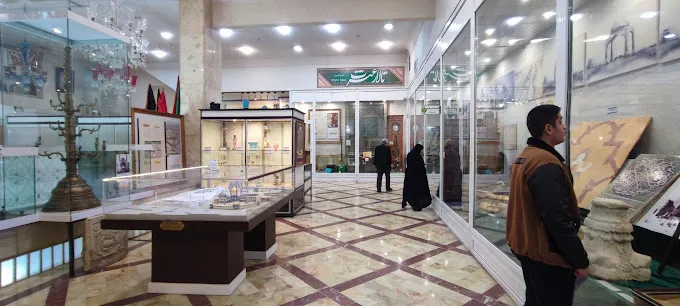
Visitors can explore a wide array of museum pieces, including millennia-old bronze and clay artifacts, glass and tile works, metal objects, wooden artifacts, textiles and carpets, seals and gems, stamps and coins, and sports medals and badges, all showcased in the Ebrat hall. Meanwhile, the Etrat Hall is dedicated to the Lady Masumah (a). It features thousand-year-old sacred historical objects from the holy shrine, including 840-year-old tiles from the mausoleum, ancient shrine and dome artifacts, and hundreds of other precious items related to the culture of pilgrimage, service traditions, historical professions, ceremonies, and Quranic culture. It also displays handwritten Qurʾans attributed to the Infallible Imams (a) and blessed artifacts from the holy shrines in Iraq.
Museum of Religion and the World
The Museum of Religion and the World is one of the most important and fascinating museums in the city. Spanning over 3200 square meters, this museum was established with the aim promoting the Islamic way of life by educating visitors about religious knowledge and Islamic jurisprudence. The museum comprises of ten collections, each with a wide range of interesting exhibits:
Environmental Collection
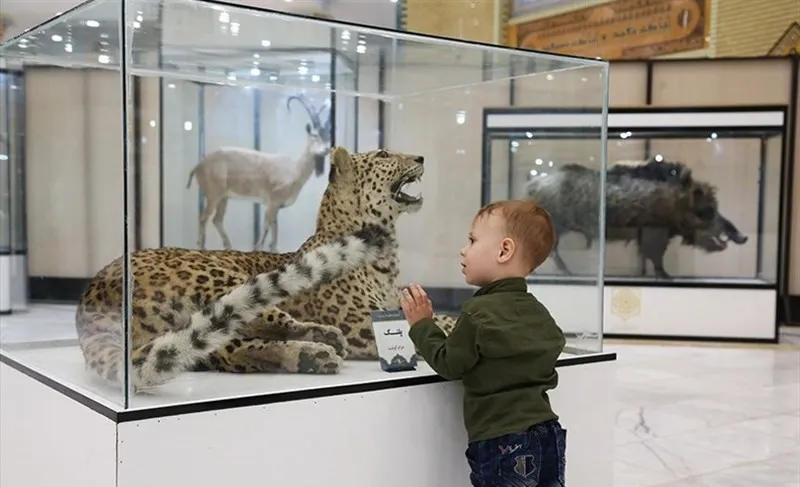
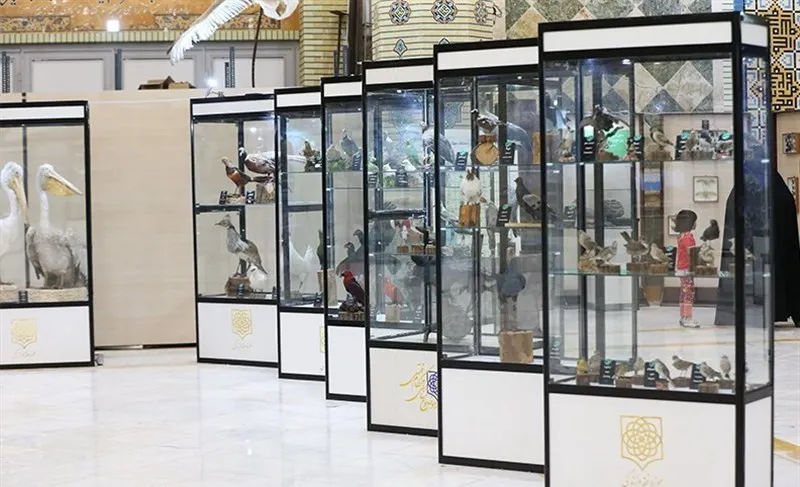
This collection features a large and attractive array of taxidermic and synthetic animals including over 200 species of aquatic animals, more than 60 species of birds, over 200 species of reptiles and insects, and more than 20 species of quadrupeds.
Holy Relics Collection
Items such as the genealogical records of the Ahl al-Bayt, sacred flags of the shrines of the Ahl al-Bayt, and models of the holy shrines are displayed in this collection.
Jamkaran Mosque Collection
Here, visitors can find genealogical records of the special deputies of Imam Mahdi (a), models and old mihrabs of the mosque.
Scholars and Jurists Collection
This collection features genealogical records and photos of Shia marjas and jurists and a variety of their personal belongings such as handwritten books and, unusually, the car of Grand Ayatollah Gulpaygani (ra).
Worship Collection
This collection displays a model of the Kaaba, visual representation of the Hajj rituals and other acts of worship and precious stones.
Work and Life Collection
For those interested in the history of Iran and the Islamic world, this section shows some of the ancient tools and equipment used for work and daily life, and traditional and antique items.
Economy Collection
This features a collection of coins, banknotes, old endowment deeds, contracts, and ancient scales and balances.
Cultural and Social Collection
The Islamic Republic of Iran has been the target of western imperialism for decades so this collection showcases some examples of the ‘cultural invasion’, including gambling tools, drugs, leisure and entertainment instruments, and ostentatious clothing.
Citizenship Collection
Displays in this section highlight issues such as infringement on people’s rights, neighborhood rights, obstruction and noise pollution, and the destruction of public property through visual representations.
Defence Collection
In this section, models of historical Islamic battles such as the battles of Uhud and Khandaq, various types of light and heavy weapons, spoils of war, and more, are on display for the public.
Holy Defence Museum
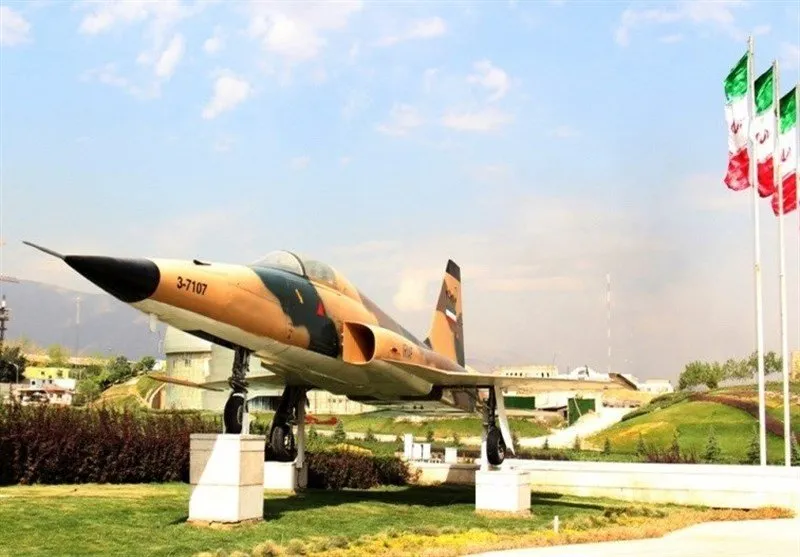
Over forty years have passed since the 1980-1988 Iran-Iraq war, often referred to as the ‘Holy Defence’. This museum serves to honour the brave men who sacrificed their lives in the war and to remember the lofty goals of the Islamic Republic. Numerous artifacts from the war are on display both outdoors and inside the main building. The main building itself covers an area of 7800 square meters and comprises of three floors, one of which houses the largest and richest library on the Holy Defence and related themes. Despite the museum being inaugurated in 2020, there are a limited number of exhibits; however, there are plans to add 14 more galleries by the end of 2024. Unlike many other museums, entry to this museum is free of charge.
Comments & Suggestions
Have something useful to add? Share your experience, recommendations or updates with other students in Qum. This could be a change to the information above, a useful tip, a service or place you recommend, or anything else that may help others. Comments are reviewed before they are published. Please see our comment policy for what can be published and how to request the removal of a contribution.
Loading contributions…