Although Qum has a rich history even prior to Islam — as archaeological excavations in the area have discovered — greater interest lies in the times after the advent of Islam. Qum has been inhabited by Muslims since the early years of Islam, when Abu Musa al-Ashari conquered the area in 23 AH / 644 AD. Thereafter, Qum became a more permanent settlement for small groups of Shias in 66 AH / 685 AD following the uprising of Mukhtar al-Thaqafī in Kufa.
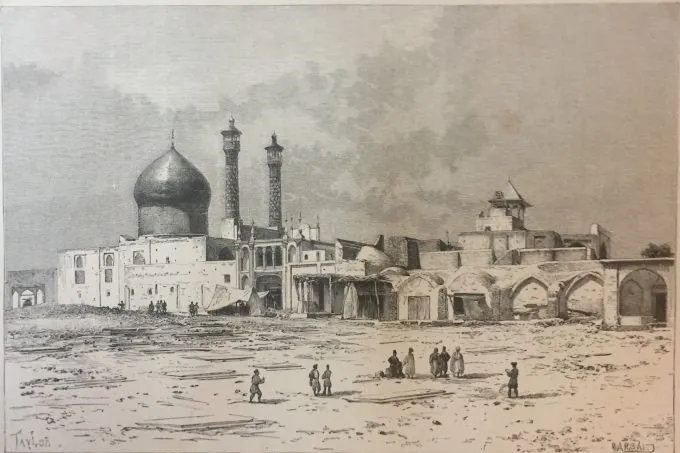
The city of Qum remained a Shia stronghold for many years but gained significant popularity after the demise of Lady Fatimah Masumah (a) in the city in 201 AH / 816 AD, as she headed towards her brother, Imam Ali al-Ridha (a), in Mashhad. Her shrine (haram) has been the focal point of the city up to today, with almost 20 million pilgrims from all over the world visiting the city every year. It is commonly accepted that Lady Masumah (a) is the primary reason Qum has gained its reputation as the centre for Shia Islamic scholarship and education, since Shia scholars would migrate to Qum in order to be close to her holy shrine and benefit from her presence.
Many great scholars have lived and studied in the hawzah of Qum, including Abu Jafar Muhammad ibn Ali Babawayh Qummi, popularly known as Shaykh Saduq (d. 381 AH / 991 AD); Sadr ad-Din Muhammad Shirazi, also called Mulla Sadra (d. 1050 AH / 1640 AD); and Grand Ayatollah Shaykh Abd al-Karim Hairi (d. 1355 AH / 1936 AD), who is considered to be the founder of the modern-day hawzah when he took the reins in 1921.
Comments & Suggestions
Have something useful to add? Share your experience, recommendations or updates with other students in Qum. This could be a change to the information above, a useful tip, a service or place you recommend, or anything else that may help others. Comments are reviewed before they are published. Please see our comment policy for what can be published and how to request the removal of a contribution.
Loading contributions…