A visa is an official document that allows the bearer to legally enter a foreign country. Almost all foreigners require a visa to enter the Islamic Republic of Iran, whether it be a visa on arrival or one obtained in advance. However, citizens from a handful of countries, such as Iraq, Turkey, and Lebanon, enjoy visa-free travel to Iran.
Recent changes have modernised the visa process; a traveller’s passport is no longer stamped or affixed with a visa. Instead, a paper visa is issued. Additionally, the date of entry and exit from the country are no longer stamped, as eVisas are linked to the individual’s passport number and all details are stored electronically. As with any country, Iran has its own specific visa application requirements, which must be carefully adhered to. More details and official guidelines can be found here.
Student Visas
Once an application to study in the hawzah has been approved, the institution will initiate the process of securing an education visa (visa tahseeli), also known as a student visa, on behalf of the student. This procedure can take very long, sometimes extending to six months or more, depending on the student’s nationality. Security clearances and visa issuance times for students from the USA, Canada, and the UK typically take longer due to their political and diplomatic relations with Iran. It is advisable for students to periodically check on the status of their application by contacting the school directly.
Upon obtaining the necessary security clearance, the school will request a ‘Visa Grant Notice’, commonly referred to as an ‘authorisation code’. This code, issued by the Ministry of Foreign Affairs, authorises the Iranian embassy in the student’s home country to issue the visa. Once the Visa Grant Notice is received by the school, it is forwarded to the student, who then must follow the procedures of the respective Iranian embassy to obtain the visa. It is recommended that students contact their local Iranian embassies for specific instructions and further information.
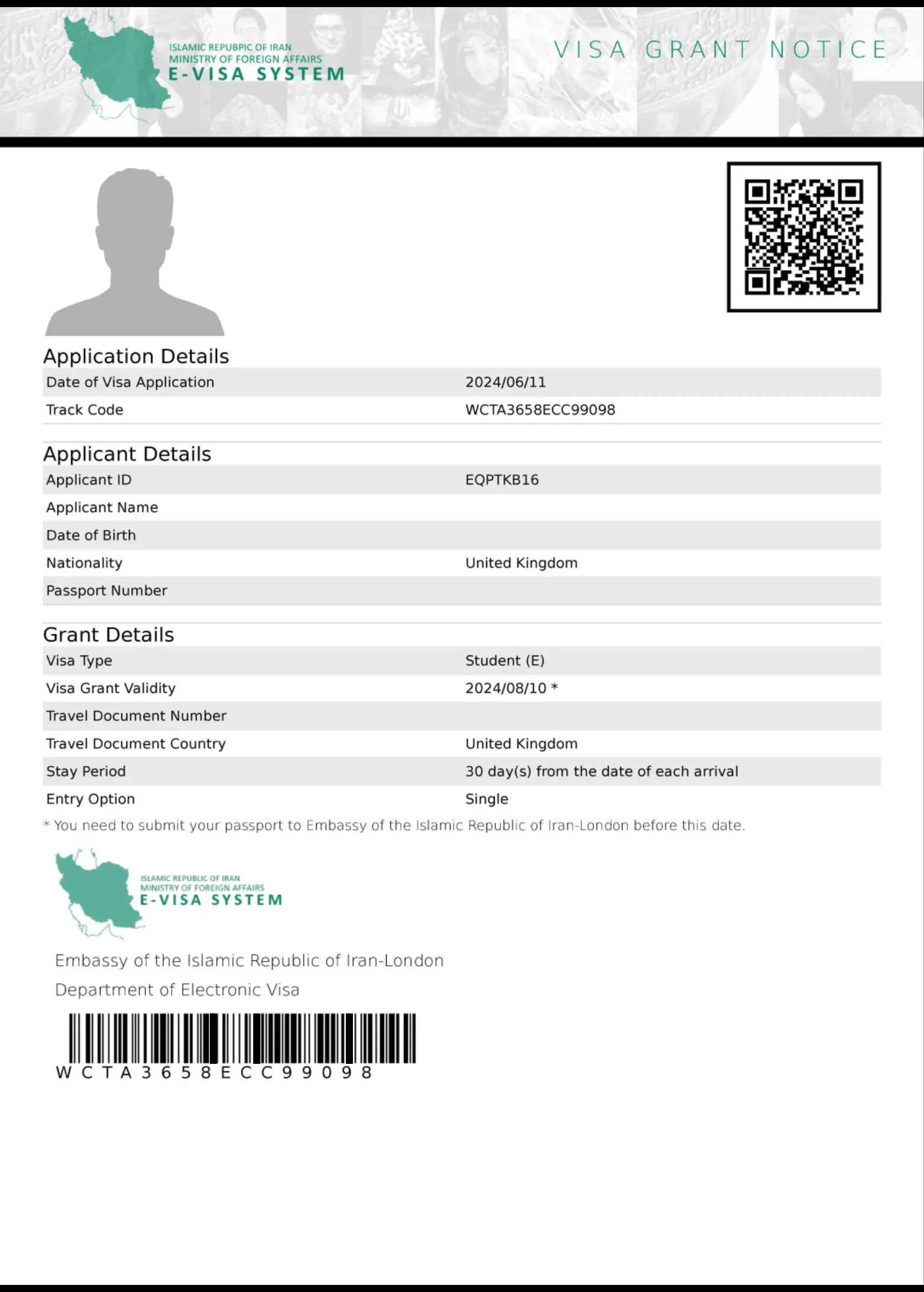
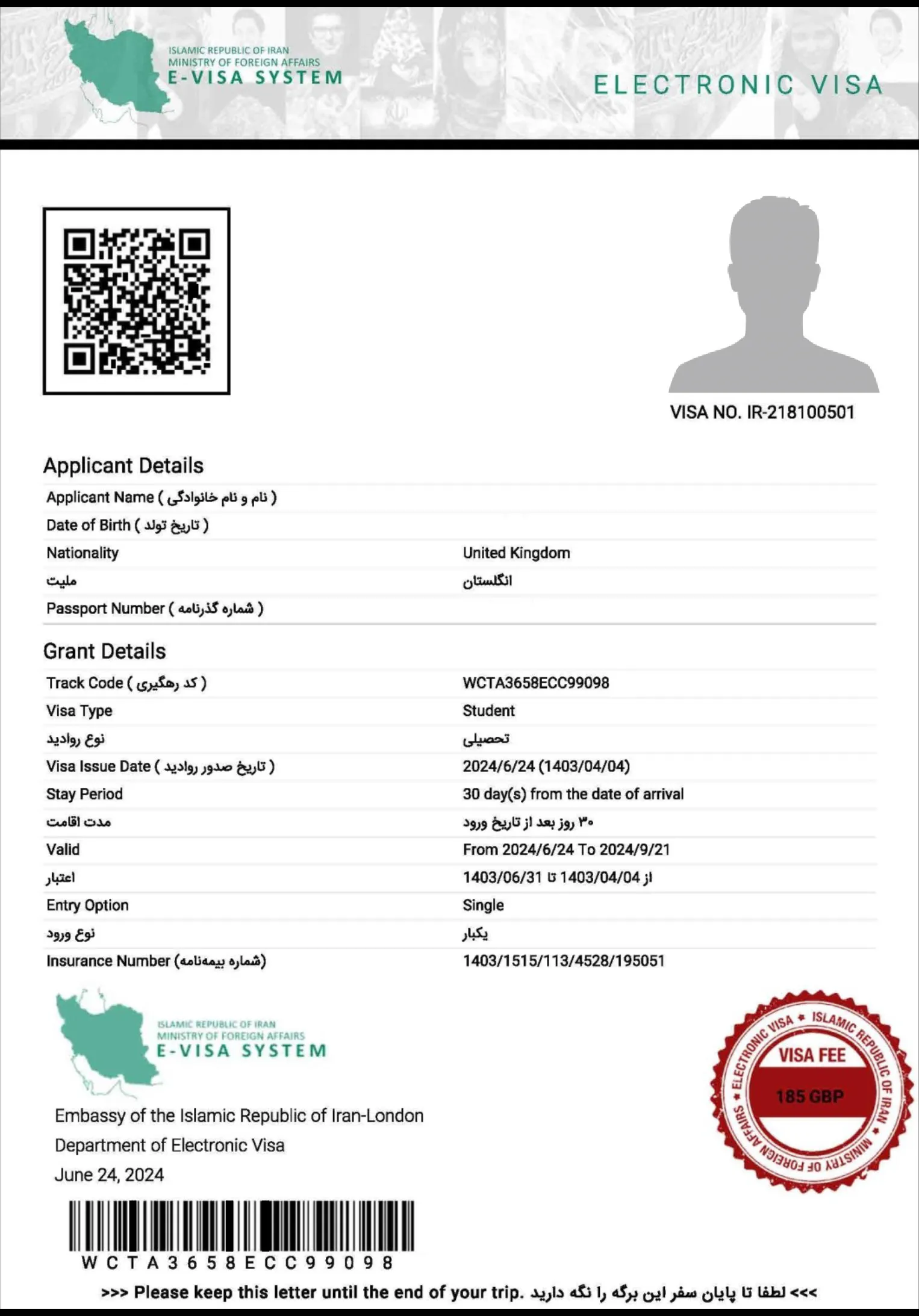
Education visas are typically not free, so students should be prepared to pay a fee. The cost varies from country to country, but generally ranges from $50 to $400. The Visa Grant Notice is normally valid for 60 days, requiring the bearer to submit their passport to the embassy within this period to obtain the visa. The visa itself is typically valid for 90 days, meaning the bearer must enter the country within three months from the date of issue.
Visas for Dependents
A student visa is issued solely to the individual applying to study in the hawzah and does not extend to family members. Married students intending to bring their families (spouse and children) must independently secure separate visas for them.
Applications for the Visa Grant Notice can be submitted electronically through the Ministry of Foreign Affairs E-Visa website or via a travel agent. The online application offers the benefit of tracking one’s application, and does not incur a fee for the visa code. However, many individuals report delays and a higher rejection rate using this method. Utilising a travel agent can significantly increase the chances of approval and expedite the process, although it can work out quite expensive as they charge between $20 and $80 per application (excluding the visa fee itself).
It is crucial for the student’s family members to arrive on a visa that can later be converted into a residence permit. The most suitable options for this purpose are an Entry Visa, a Pilgrimage Visa, or a Tourist Visa. A transit visa is inadequate for this purpose and should be avoided.
Comments & Suggestions
Have something useful to add? Share your experience, recommendations or updates with other students in Qum. This could be a change to the information above, a useful tip, a service or place you recommend, or anything else that may help others. Comments are reviewed before they are published. Please see our comment policy for what can be published and how to request the removal of a contribution.
Loading contributions…